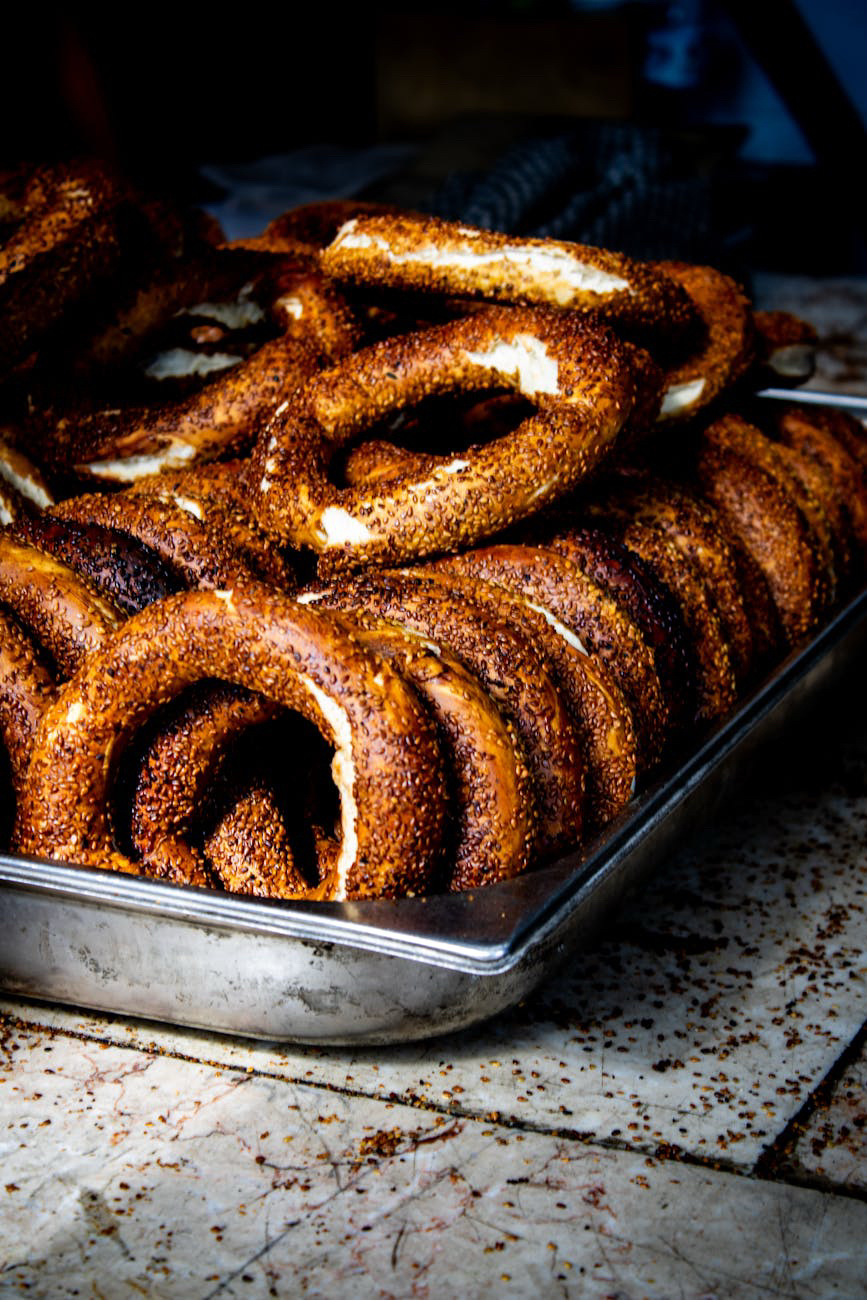
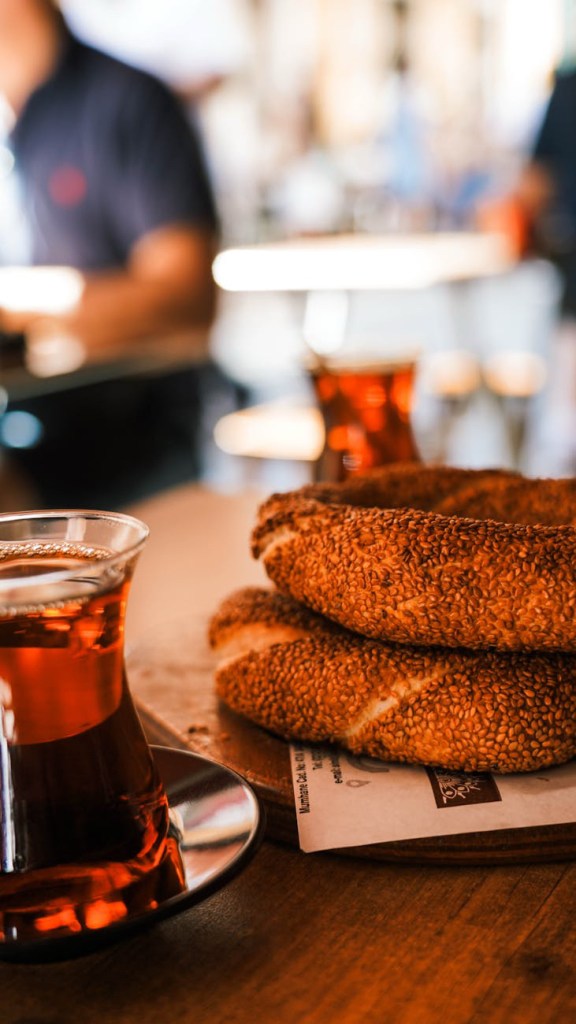
For centuries, simit has been one of the most beloved parts of daily life in Turkey. Whether enjoyed on a ferry at sunrise, grabbed on the way to work, eaten on a bus, or shared during a long weekend breakfast, this sesame-crusted ring bread has become a symbol of Turkish mornings.
But where does the word simit come from, and how long has it existed in the form we know today?
Where Does the Word “Simit” Come From?
The word simit is believed to come from the Arabic word samid, which refers to fine bulgur, semolina, or flour. Over time, the term entered Ottoman Turkish and eventually became associated with the baked ring bread we know today.
Across the region, similar baked goods are known by different names. In Greek, it is called koulouri, while in Romania it is known as covrigi. These variations hint at how deeply rooted this type of bread is in the culinary traditions of the Eastern Mediterranean and the Balkans.
The First Ottoman Uses of the Word
Interestingly, the earliest Ottoman use of the word simit did not refer directly to the bread itself, but to flour. In the Ottoman palace, the official known as the simitçibaşı was responsible for deciding how flour would be distributed, and the place where it was stored was called the simithane.
This shows that the word originally had a broader meaning connected to grain and flour before it evolved into the name of the baked product.
When Did Simit First Appear in Its Modern Meaning?
The earliest known reference to simit in something close to its modern sense appears in a 1525 narh register. A narh was an official Ottoman price-control list that set maximum prices for goods and services.
In this record, items such as “Halebi, boğaça, the ring bread of the Jews, and oil-free simit” are listed with a weight of 300 dirhem. This is one of the earliest written sources showing simit as a recognized baked good in Ottoman food culture.
Simit and Simit Sellers in the 17th Century
By the 17th century, simit and simit sellers had begun to form their own distinct place among Ottoman tradesmen, separate from other bakers and pastry makers.
One of the most important sources from this period is Evliya Çelebi’s Seyahatname (Book of Travels). In his account of the era of Sultan Murad IV, he describes the simit sellers as an established guild with around 70 shops and 300 workers in Istanbul.
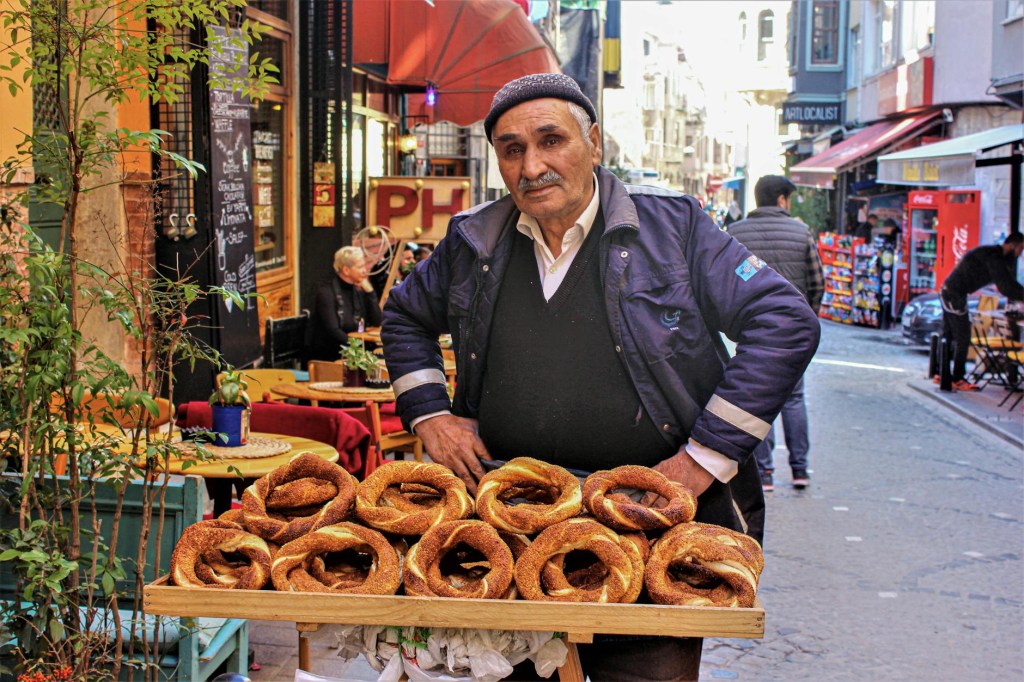
He also gives a vivid picture of how simit was sold in the city. According to his description, simit sellers decorated their carts and shops, threading large simits onto poles and transporting them with porters. Smaller simits were displayed in the shops and offered to passersby.
This scene paints a lively image of Ottoman street life, where simit was already becoming an everyday food for ordinary people.

What Kind of Simit Was Made in Ottoman Times?
The “wheel-sized” simits mentioned in old sources likely referred to larger, thicker simits. The smaller simits, on the other hand, were more similar in size and appearance to the ones we eat today.
According to historical accounts, three main types of simit were made in the Ottoman period:
sweet rings (sükkeri halka) sesame-coated rings the type that would eventually evolve into today’s simit
Until the late 17th century, the simit we know today was often referred to as simid-i halka, meaning “ring simit.” Later, the shorter and simpler word simit became the common name.
From Ottoman Streets to Modern Breakfast Tables
From palace flour records to the bustling streets of Ottoman Istanbul, simit has had a long and fascinating journey. Over the centuries, it transformed from a term connected to flour into one of the most recognizable foods in Turkish culture.
Today, simit remains as popular as ever. It is simple, affordable, portable, and deeply nostalgic. More than just a snack, it is part of a daily ritual, a shared memory, and a flavor that connects the past with the present.
Simit has truly earned its place as an enduring staple of Turkish mornings.


 GoByBolt